A Leading Ukrainian IT Company Rebuilt Delivery to Scale Without Burning Out the CEO
* While we’ve anonymized names to respect client privacy, the metrics and strategies detailed here are authentic and verifiable.
The challenge
The CEO spends 50% of his time firefighting delivery issues. 0% on strategy.
Ten years later, the business had grown. But the way they ran delivery hadn’t.
The founder & CEO was buried deep in daily operations. He reviewed estimates, approved project launches, and stepped in when things went off track. He was also leading sales through his personal network, but didn’t have the time to focus on it properly. Little space was left for strategy or long-term planning.
Meanwhile, the rest of the team wasn’t set up to operate independently. There were no clear KPIs, no ownership, and no repeatable process. And it showed.
Problems started at the pre-sale stage. Estimates were weak. Delivery relied too much on Volodymyr’s personal oversight to move forward quickly.
More projects? More pressure. To reduce that pressure and scale easily, the company contacted Wiseboard.

“Our Delivery model was missing critical roles. I had concerns that, without expert consultation, we would repeat mistakes that others had already solved.”
Transformation scope
Wiseboard connected the company with Denys Rudenko, a senior advisor with 13+ years of experience in the IT industry.
“One of the first things I noticed was how involved the CEO still was in daily delivery tasks. At this stage of growth, the company needs structure, not the CEO solving day-to-day issues.”
 Denys RudenkoWiseboard advisor
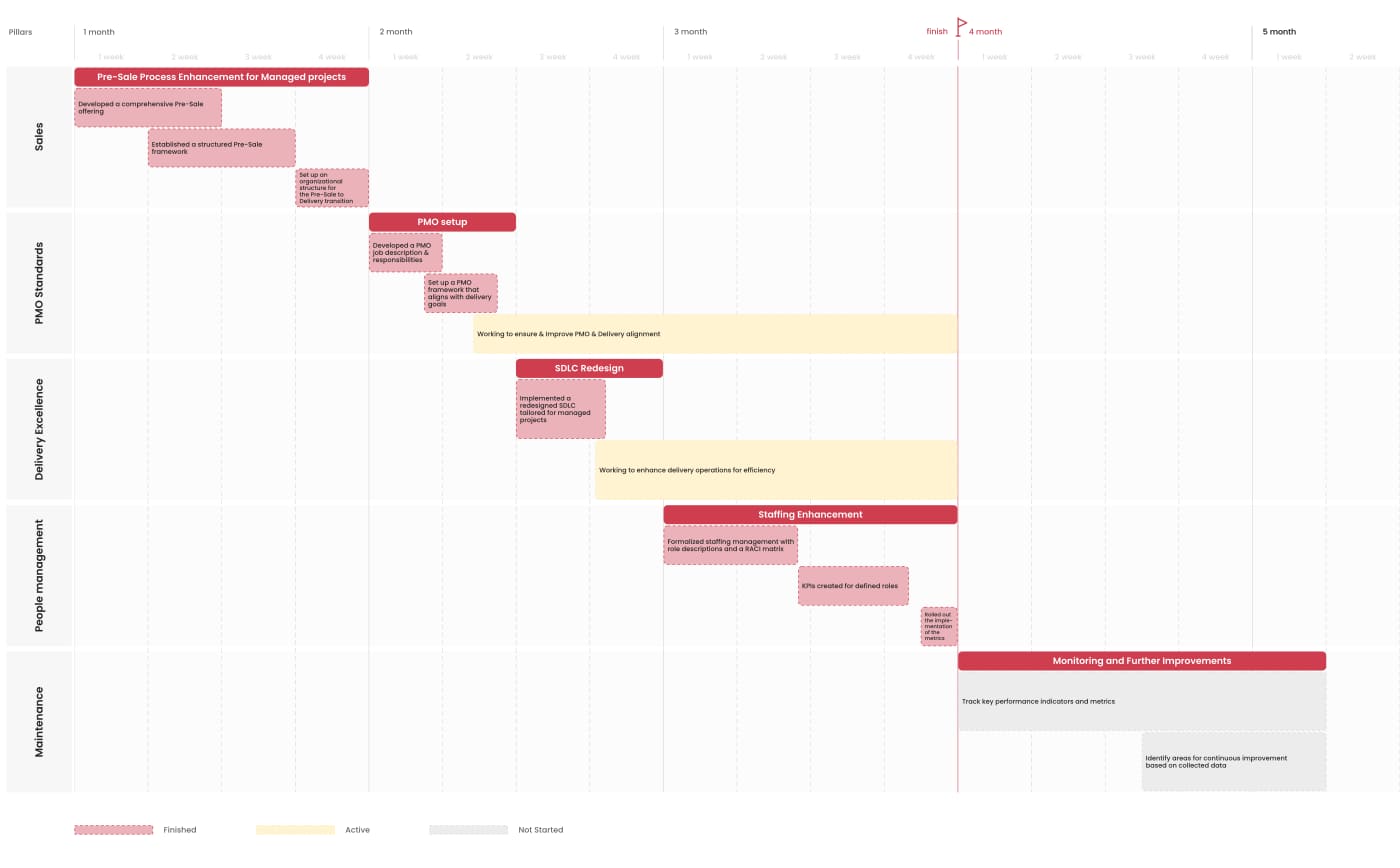
Together, they reviewed how different parts of the company were connected: staffing, project management (PM), delivery, presale, and account management (AM). The engagement lasted three months and included 12 working sessions. Denys led workshops, gave the team tasks to complete between meetings, and reviewed their progress. He also shared materials and templates to support implementation.
“My goal is to reduce my involvement in delivery processes to 0% over the next 12 months as the new structure and team take full ownership.”
Below is a breakdown of Denys’ solution and the key recommendations that helped the company move toward their objectives.
The solution
Denys brought in a structured framework to help the business build the right system and processes where delivery responsibilities wouldn’t depend on the CEO.
His approach focused on three core pillars:
- Ownership and org structure: Defining missing delivery roles (like Head of PMO), clarifying responsibilities across the CEO, AMs, PMs, and delivery teams to ensure fewer handoffs, less confusion, and less CEO involvement in every decision.
- Process maturity: Refining the software development lifecycle (SDLC) and formalizing how projects move through each stage, so the company could scale delivery without reinventing the wheel each time.
- Profitability and performance tracking:Running a P&L gap analysis at the project level, introducing KPIs to track delivery performance, and helping the team understand where they were leaking margin and how to fix it.

Recommendations
Objective 1: Shift delivery ownership from the CEO to the team
Action #1. Redefine leadership roles and org structure
Denys worked with the company's CEO to map out how delivery, staffing, presale, and account management interact. This helped define where new roles were needed and how each function should work together.
First, they redefined the Head of Delivery role, clarifying its responsibilities, authority, and reporting lines. Then, they identified a key gap: the business lacked a Head of PMO.

At the company’s size, both roles were essential.
Once the structure was clear, the CEO realized the current Head of Delivery didn’t meet the new expectations. That triggered a broader leadership change.
Action #2. Introduce a KPI matrix across the company
Then, Denys walked the company through building a KPI matrix so each team knows what to measure and who owns each metric. Every role now has clear KPIs and a simple dashboard to track results.
For example, the Head of Delivery is now measured by revenue per project, CSAT/NPS scores, gross profit margin, and team satisfaction – things the company wasn’t tracking before.
Denys also taught the team how to actually work with NPS: how to send it, when to follow up, and how to read the data, not just send the survey to check the box.
Action #3. Promote PM to PMO and hire Head of Delivery
With the new org structure in place, Wiseboard supported the company in adjusting the team. A project manager was promoted internally to lead the new PMO. Denys coached her directly, outlining what she needed to improve and providing materials to support her growth.
With Wiseboard’s support, the company also hired a new Head of Delivery who matched the updated role requirements.
Denys interviewed both candidates, validated their fit, and supported onboarding with job descriptions, templates, and process documents.

Objective 2: Build a delivery system that works at scale
Action #1. Standardize project types and delivery approaches
The company was managing all projects the same way, regardless of size or complexity. Denys helped categorize account types and introduced a project management framework tailored to each one. Now, every project type follows clear expectations, documentation, and processes. The team can plan and forecast better.
Action #2. Redesign the SDLC and align it with pre-sale
The company’s delivery process didn’t match what was promised during pre-sale. Denys helped rebuild their software development lifecycle to close that gap. Together, they mapped out each stage, from sales handoff to delivery, and defined how it should work. That included rethinking how Discovery is run, what project documentation should look like, and how knowledge gets transferred from proposals into real execution. The team documented it all in a visual framework in Figma.
Action #3. Update the offering and sales presentations
To match the new delivery standards, Denys helped the company revise how they present their services during pre-sale. They aligned the offering with the redesigned SDLC, added clarity around Discovery, and adjusted proposal formats to better match project types.
The result: sales materials that set accurate expectations and reduce the risk of delivery misalignment.
”Wiseboard helped implement exactly what I had envisioned but wasn’t sure how to structure or roll out on my own.”
Have a similar challenge? We can help!
Business impact
The result
During our work, the company moved one prospect into the discovery phase, an early proof that the new structure was working. Behind that result was a complete delivery reset: a standardized SDLC, a working PMO, and a clear separation between strategic and operational roles. As the new setup rolls out, the CEO is gradually shifting back to strategy and sales, where his time matters most.
Be our next success story
Explore more case studies
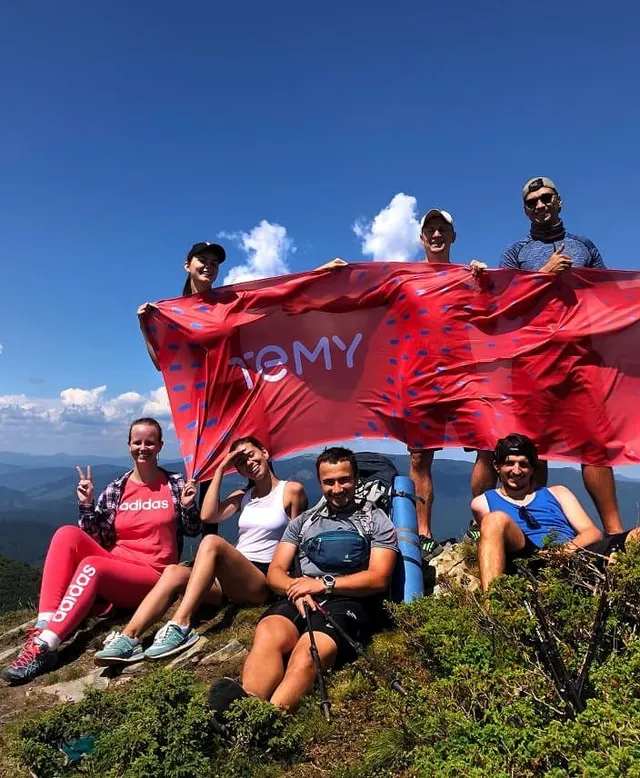
Read how fixing delivery and creating a stronger AM system helped Temy grow existing client revenue.
Case by Temy
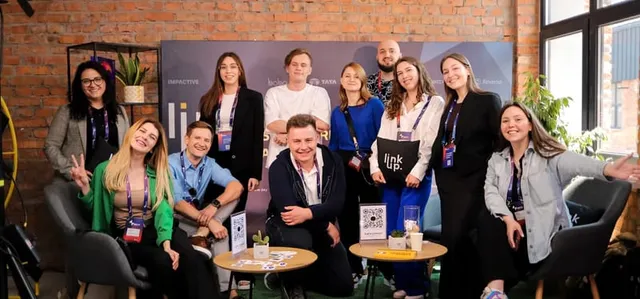
Read how Linkup Studio moved from unpredictable margins and fragmented delivery to record monthly revenue with standardized processes.
Case by Linkup Studio

Read how Wiseboard redesigned CorpSoft's delivery structure and operations, doubling client satisfaction and creating a referral system.
Case by CorpSoft